Pages

Friday, October 25, 2013

Run The Jewels. Run The Jewels. Review Sketch


year: 2013 

tones of: outkast, el-p (his solo productions), fat joe (tell me he and el-p don't sound alike), goodie mob

genre samples: hip hop, trap rap, southern rap, electronica

music: dark, bouncy, menacing, alarming, fast, distorted, hard, mean, heavy, furious, rattling

lyrics: disrespectful, playful, random, improvisational, cartoonish, stylized, crazy, aggressive, bizarre, violent, braggadocious

favs: run the jewels, 36 chains, DDFH, sea legs, job well done, a christmas fucking miracle


nb: these dudes don't get the respect they deserve. Killer Mike is a supreme lyricist (see R.A.P. Music) and El-P has been pushing monstrous electro beats long before Yeezus (see Cancer 4 Cure). 

score: 8/10

Monday, October 21, 2013

Chance The Rapper: Acid Rap. Review Sketch


year: 2013 

tones of: lil wayne, anthony hamilton, kanye west, eminem, wyclef jean, the streets, musiq soulchild, john legend, madlib, kid cudi

genre samples: hip hop, jazz, soul, electronica, r&b, gospel

music: warm, chill, smooth, light, relaxed, bouncy, joyous, summerish

lyrics: humorous, fun, light, thoughtful, quirky, therapeutic, playful, witty, real, drug infused

flow: sporadic, versatile, unmetered, spoken word poet, stream of consciousness, scraggly

favs: good ass intro, pusha man, cocoa butter kisses, juice, lost, interlude, acid rap


best guest: noname gypsy (on "lost")

nb: this is one of the most refreshingly varied and non-stereotypical rap offerings of the year (hence the many artists he reminds me of). simply a great mixtape. you can find it on soundcloud here.

score: 8/10

Thursday, October 17, 2013

Pusha T: My Name Is My Name. Review Sketch


year: 2013

tones of:  kanye west, clipse, cruel summer, ma$e (on let me love you)

genre samples:  hip hop, trap rap, electronica, boom bap, gangsta rap

music: minimalist, bare bones, direct, maniacal, driving, dark, sparse

lyrics: intricate, street, multilayered, hard, focused, gritty, real, dense, druggy

flow: consistent, menacing, wordsmith, versatile, smooth, new god flow

favs: king push, numbers on the board, sweet serenade (whoo!), suicide (that beat), 40 acres (poetry), nosetalgia (real talk), pain


nb: this is essentially an "anti-Drake" album full of hard beats and hard talk. get your duffle bag boy on.

score: 8/10 (in pusha's own words #mydopedontspoil)

Tuesday, September 24, 2013

Drake: Nothing Was The Same. Review Sketch


year: 2013

tones of: shlohmo, kanye west, kid cudi

genre samples: r&b, electronica, hip hop, jazz, pop

music: moody, dark, cloudy, ominous, smoky, serious, bass ridden, spiraling, murky, mysterious

lyrics:  intimate, honest, thoughtful, anxious, female-obsessed, longing, regretful, personal, cerebral, shallow

flow: fluid, flexible, experimental

favs: tuscan leather (so focused and technical), furthest thing, worst behaviour (bananas), from time, hold on we're going home (pure pop craftiness), too much, pound cake/paris morton music, the motion


nb: be warned. this album is heavily r&b drake. it is also strongly elevated by producer, noah shabib. in fact, if i were 40, i would have pulled what ryan lewis did to macklemore on the heist: "put my name on the cover!"

score: 7.5/10 (no classic, but solid addition to the discography)

Wednesday, August 28, 2013

Disclosure: Settle. Review Sketch


year: 2013

tones of: sbtrkt, jessie ware, burial

genre samples: house, disco, electronica, dance, r&b, garage, pop

music: warm, rippling, sprightly, playful, emotive, fluid, high energy, sparkling, dance infused, charismatic, bright, bouncing, infectious, wavvy

favs: when a fire starts to burn, latch, white noise, stimulation, you & me, january, help me lose my mind


nb: this is very much a pop album (vocals, lyrics, song structure) as it is an electronic one

score: 8/10

Wednesday, August 7, 2013

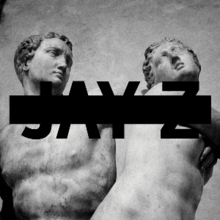
Jay-Z: Magna Carta Holy Grail. Review Sketch


year: 2013

tones of: jay-z, kayne west, kid cudi

genre samples: hip hop, trap music, r&b, dubstep, rock n roll 

music: spacious, modern, sparse, detailed, futuristic, unpredictable, artistic, banging, up tempo

lyrics: serious, focused, ambitious, professional, measured, luxurious, all business, solid

favs: picasso baby, 
f*kwithmeyouknowigotit (straight up banger), f.u.t.w. (lyrical quality), somewhereinamerica, jay z blue, nickels and dimes

note: this reminds me of the black album. solid lyrics and elite, forward thinking beats. arguably not as compelling overall as kanye's yeezus, but nearly as good.

score: 7.5/10

Sunday, June 30, 2013

Guns, Germs, And Steel: Book Review


Author: Jared Diamond 

Length: (425 pages, plus a 15 page afterword)

What is It: Guns, Germs, And Steel is a theory on the evolution of society - not in terms of biological or evolutionary differences but in terms of geographical and sociological differences. GGS attempts to answer the question: "Why did history unfold differently on different continents?" The author goes beyond proximate forces like trade, technology, and societal organization to uncover what he defines as "ultimate causes".  Diamond does this by exploring a broader view of world history (beyond Europe, The Middle East, and North Africa), by studying smaller time scales (hundreds to thousands of years instead of the last 13,000) and by analyzing natural experiments (history of the Polynesian migration) in order to better identify, isolate, and understand these ultimate causes on a global scale.

What's Said: Geographical differences in the local availability of wild plants and animals were key driving forces in societal development. The orientation of the continental axes (east to west like in Euroasia is better than north to south like in The Americas & Africa) created stark differences in climate, biodiversity, and idea diffusion. Human migration led to the mass extinction of domesticable animals on most other continents besides Euroasia. The caloric efficiency of food production was the source of the gradual shift from hunter-gathering to farming. Farming affects population density by requiring settlement, necessitating storage, providing seasonal downtime, and supporting higher birthrates. Excess food production contributed to the permissibility of specialization, innovation, and kleptocracy. Bureaucratic organization becomes necessary because of limits to communal decision making, inefficiencies in pairwise economic exchange, increasingly difficult conflict resolution, and resource constraints. Writing was created to record food production and to protect systemic administration - not to support public expression. Religion and patriotism provided the shared ideology and motivation for citizens to sacrifice their lives and self interests on behalf statehoods, which was a radical break from the human social contract. Euroasia's conquest of much of the world (and not the other way around) was due to the separate trajectory of all these causes and evolutions.

What's True: Euroasia is the world's largest landmass and one of its most ecologically diverse landscapes. Localities distributed across latitudes are very similar in terms of seasons, time, temperature, habitats, and diseases compared to longitudinal axes. The efficiency of farming is 10-100 times that of hunter-gathering. Food production (wheat, pea, olives) arose the earliest in Southwest Asia (Near East/Fertile Crescent), around 8500 BC. Only a very small minority of wild plants and animals have been domesticated for food. A dozen plant species account for over 80% of the modern world's crops, and less than 15% of wild animals are domesticable (18% Euroasia, 4% in America, 0% in Africa). Domesticating animals depends on their diet, growth rate, disposition, social structure, and captive reproduction. Domesticating plants depends on fruit size, dispersal mechanism, taste, fleshiness, oiliness, yield, fiber length, and reproduction. Eurasian culture likely yielded more calories and organization per person on average than Native American culture. Large scale deadly diseases (smallpox, measles, flu) evolved through the mutations of germs during animal domestication and is almost exclusive to large dense populations of social animals like humans and livestock. More Native Americans died from Eurasian germs than European guns and swords (over 95%). Archeological evidence suggests that North America was occupied by 20M local natives upon Columbus' arrival rather the 1M often cited. 

So What: 
The writing in Guns, Germs, And Steel is cumbersome at times, but given the breadth and depth of the material and the objective this can be forgiven. GGS paints a new picture of global civilization that is completely independent of the need for one race to be superior than another other - an astounding theoretical feat. This is not just an academic exercise, however. GGS is instead, a practical and political guide to the driving forces behind many of the historical legacies that still shape our geopolitical landscape today. The approach that Diamond takes is methodical, and I agree that more work should be done to adapt the methods of hard sciences into the study of history.

Final Word: Very Enlightening Read